
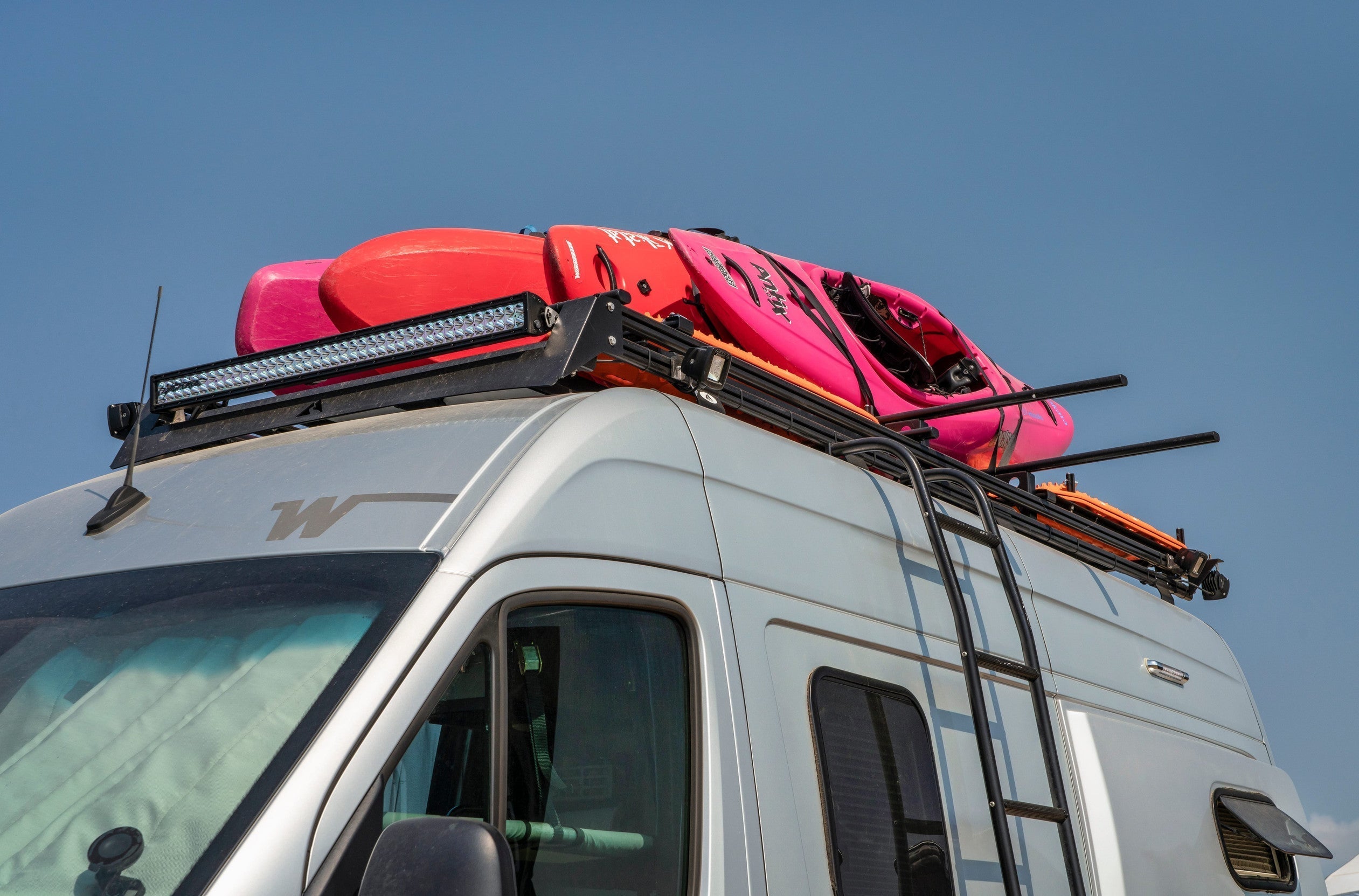
Building out a Mercedes Sprinter van starts with making use of every inch of available space and choosing upgrades that support how the vehicle will actually be used. One of the most valuable additions to almost any build is a roof rack, since it increases storage capacity, opens up room for accessories like solar panels, clears out your interior, and gives you a place to carry gear that does not belong inside the van. With so many rack styles on the market, choosing the right setup takes more than a simple price comparison. The best roof rack should match your build goals, driving habits, cargo needs, and plans for future upgrades. This guide breaks down what to consider when comparing a Flatpack, Safari Rack, Rhino-Rack, and other roof rack options for your Sprinter.
Why You Need a Roof Rack
The inside of a Sprinter van fills up quickly. With food storage, supplies, sleeping areas, and mechanical systems, there’s not a lot of room left for other items. A roof rack lets you move bulky gear outside while keeping your interior functional and uncluttered.
Beyond upgrading your storage, a well-designed roof rack helps to distribute weight evenly across the van’s roof. This helps protect your van’s roof from damage and can prevent leaks or other damage over time. It also creates a stable platform for mounting accessories like solar panels, awnings, lighting, and even rooftop decks.
Understanding the Main Roof Rack Styles
The first step in choosing the right roof rack is understanding the different styles available and how they fit into various build types.
Low-profile roof racks are designed to sit close to the roofline, making them best for drivers who want to maintain overhead clearance for parking garages or driving in urban areas. They offer a clean, streamlined look and reduce wind resistance, which can help with fuel efficiency. However, they typically offer fewer mounting options and are better suited for those who don’t need much rooftop storage space.
Standard roof racks are the most versatile option and are a good fit for most Sprinter builds. They offer a balanced combination of height, storage capacity, and flexibility. With adjustable crossbars and the ability to work with a wide range of accessories, standard racks allow you to install solar panels, cargo boxes, lighting, and more without major modifications. For many van owners, this option strikes the right balance between simplicity and functionality.
Safari-style or full-deck roof racks take things a step further by providing a complete rooftop platform. These racks are designed for maximum storage and are often used in overlanding builds or setups that require hauling heavy gear. They allow you to actually walk on the roof and secure large loads, which is incredibly useful, but they also add weight and cost to your build. Installing these racks can be more complex as well, and they are generally better for users who know that they need the high storage capacity these racks offer.
Important Factors to Consider
Once you’ve narrowed down the style of rack that fits your needs best, it’s time to get into the smaller details of what your needs look like so you can pick out an exact model.
One of the most important things to consider is how you plan to use your roof space. But you need to think beyond your immediate needs and consider how your build might evolve over time. A modular rack system with adjustable crossbars or optional decking will allow you to redesign your rack as needed later. This flexibility can save you from having to replace your rack as your needs change.
Weight is another critical factor. Every roof rack has both a dynamic weight rating, which applies while the vehicle is in motion, and a static weight rating, which applies when the vehicle is parked. While racks themselves can often handle very heavy loads, your van’s roof has its own limits. Staying within those limits is required for safety and for protecting your Sprinter.
Compatibility is an area where many buyers run into trouble. Sprinter vans come in multiple wheelbases, roof heights, and models, and roof racks are usually designed to work with specific configurations. Ensuring your rack matches your van’s exact specifications is absolutely necessary for ensuring proper installation and long-term performance.
Installation is also worth considering, especially if you plan to handle it yourself. Many low-profile and standard racks are designed for relatively easy installation, often requiring only basic tools and a few hours of work. Larger, more complex systems like safari racks may require additional time or even professional installation.
Another important factor is how well the rack integrates with accessories. If you plan to add lighting, solar panels, awnings, or other gear, choosing a rack with built-in mounting options can make a big difference. Systems that make adding accessories easier will simplify the process and reduce the need for custom modifications later.
Last but certainly not least, consider how the rack fits into the overall look of your build. While functionality should always come first, aesthetics still matter. A low-profile rack offers a subtle, streamlined appearance, while a larger rack with a full deck creates a more rugged, expedition-ready look.
Budget and Long-Term Value
Roof racks for Sprinter vans can vary significantly in price, ranging from fairly affordable low-profile options to high-end full-deck systems that require a hefty upfront investment. While it may be tempting to focus on upfront cost, it’s important to think in terms of long-term value and the use you’ll get from your roof rack.
A cheaper rack may save money initially, but it could limit your ability to expand your build or require replacement down the line. And if it’s not large enough to meet your storage needs, then it was really a waste of a purchase altogether. Investing in a durable, modular system often pays off by providing more flexibility and improved longevity.
Common Mistakes to Avoid
Choosing the wrong roof rack can leave you feeling frustrated over unnecessary expenses and unmet expectations. One of the most common mistakes Sprinter owners make is selecting a rack that doesn’t match the van’s specifications, whether it’s the wrong wheelbase or roof height. Another common issue is underestimating your van’s weight limits, which can have a negative impact on both safety and performance.
Some buyers overlook how valuable a modular system can be, instead choosing a rack that works for their current needs, but doesn’t allow for any future upgrades. Other common mistakes include underestimating the complexity of installing the rack or focusing too heavily on the upfront price without considering durability and long-term usability.
Avoiding these mistakes can help you make a smart investment, and it starts with taking the time to think through what you need in a roof rack and how you plan to use your van over the years.
Final Thoughts
Choosing the right roof rack for your Mercedes Sprinter van build means adding storage in a way that improves function, supports your setup, allows for future expansion, and fits the way your vehicle is used. The right rack should match your cargo needs and the demands you put on your Sprinter day to day.
When you take the time to evaluate your needs, consider future upgrades, install correctly, and invest in quality, your roof rack can be a long-term asset on your van. Not only can it expand what your van can carry, but it also helps your van reach its full potential. Contact ROAMBUILT today to get expert guidance in choosing the right roof rack, whether it’s a Flatpack, Safari Rack 2.0 SLB, or something in between.