
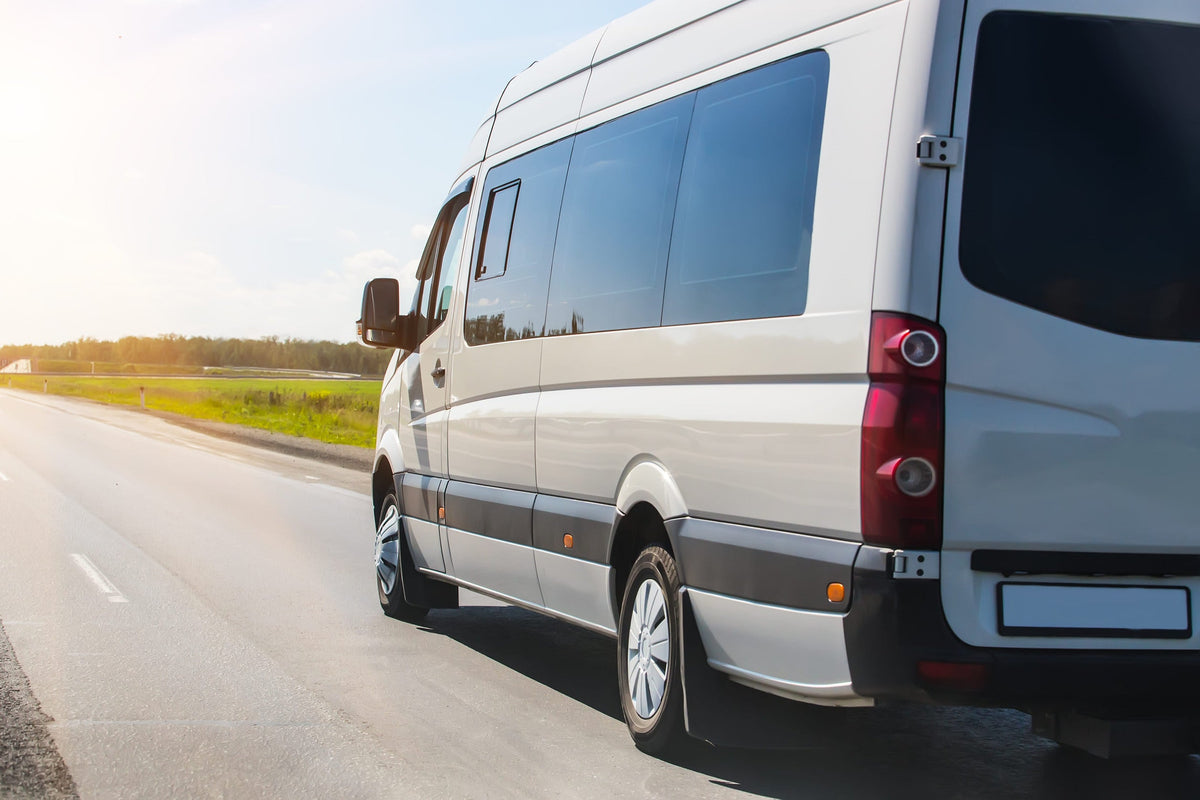
The weight and layout of your Sprinter roof rack affect more than rooftop storage capacity. They also influence how your Sprinter handles during everyday driving. Adding gear above the roof raises the van’s center of gravity, with the overall impact depending on total weight, cargo placement, and how the rest of the vehicle is loaded. A heavily loaded roof can affect steering response, cornering, braking, and sensitivity to crosswinds. This guide explains how roof rack weight affects Sprinter handling and how to use rooftop storage more effectively while maintaining stability, control, and daily drivability.
Understand the Difference between Rack Weight and Roof Load
Rooftop equipment has a big impact on your van’s center of gravity because of its distance from the ground. As roof weight increases, the center of gravity moves upward as well. This can affect how your Sprinter feels when you’re steering and braking, or when driving in windy conditions. A carefully planned roof rack setup keeps these issues under control. To do that, you need to understand the difference between rack weight and roof load.
The rack weight is the mass of the roof rack itself, including the rails, crossbars, brackets, mounting hardware, and other components that are part of the rack’s structure. The roof load includes the rack plus any equipment it carries. That can include solar panels, mounting hardware, storage boxes, awnings, traction boards, ladders, watersports equipment, or other recreational gear. Obviously, a 100-pound rack doesn’t have a 100-pound roof load when you’ve loaded it with two solar panels, a storage box, and extra equipment. You need to account for everything the roof structure is supporting.
This is extremely important when you’re reviewing load ratings. A dynamic load rating describes the maximum load a roof or rack system is built to support while the vehicle is moving. A static load rating generally refers to when the vehicle is stopped, and the two can be very different. Always check your Sprinter’s specific model specifications, as well as the roof rack’s requirements when building your roof rack setup.
Start with a Complete Roof Rack Layout
Plan your roof rack before buying any equipment. Start by identifying everything you want on the roof, and estimate the actual weight once it's installed. Solar panels typically require space that might otherwise be used for storage or equipment. A roof box might provide storage capacity, while an awning can occupy a long side section of the rack.
Create a simple overhead layout showing the rack’s dimensions and the approximate location of each stored or mounted item. Include mounting points, crossbars, solar panels, boxes, access equipment, and any areas that need to stay clear. Planning the arrangement before buying anything helps you avoid unnecessary roof weight and makes it easier to ensure everything on the rooftop is accessible.
Keep Heavy Equipment Low If Possible
Weight distribution matters throughout your Sprinter, especially when it comes to rooftop weight. Store heavy items inside the van, as close to the floor as possible. Batteries, tools, spare parts, recovery equipment, and heavy gear can be stored in lower cabinets, under beds, or other low storage areas.
The roof is best for equipment that needs to stay outside the living space. Solar panels are a clear example, because they require rooftop exposure to work. Lightweight awnings and appropriately sized storage boxes can also work well, as long as you account for their weight. By keeping heavy cargo lower, you also lower the van’s center of gravity and reduce the risk of tipping over.
Distribute Rooftop Loads Evenly
Once you know the total roof load, not just the rack weight, you need to think about where that weight sits. Avoid putting several heavy accessories on one end or along one side of the rack. An uneven weight distribution can affect how the van steers, especially around corners.
Spread rooftop equipment across the available rack space. If you have a storage box on one side, consider the location of other equipment instead of automatically filling the remaining space with other heavy gear. Solar panels can sometimes be arranged to use otherwise open areas while keeping the overall weight distribution balanced. Remember, the goal isn’t to fill every section of the rack. It’s to create a useful arrangement with an appropriate weight distribution.
Account for Braking and Cornering
Additional weight on the roof affects your vehicle’s dynamics. More total weight makes the brakes and tires work harder to bear the load and stop the vehicle when needed, while a higher center of gravity can affect the van’s movement around corners. This is why it’s important to treat the roof rack as part of the van’s overall configuration and view it as an extension of the vehicle. You should drive a little differently, take corners a little slower, and brake a little earlier any time your roof rack is fully loaded.
Consider Crosswinds and Fuel Efficiency
A Sprinter’s tall profile already presents a significant surface area to moving air as you drive. A roof rack adds to that profile, especially when loaded with equipment. Always consider your van’s aerodynamics when loading the rooftop, as the location of your accessories can affect how the van feels in crosswinds and at higher speeds. A roof setup that’s light, compact, and neatly arranged will have a less dramatic impact on how your van handles crosswinds.
Those aerodynamics also directly affect fuel consumption. The more wind resistance your Sprinter faces, the more fuel it will consume to go the same number of miles. By keeping your rooftop accessories low-profile, you’ll save on fuel with every trip while also making your van easier to handle.
A Better Roof Rack Starts with Better Planning
A Mercedes Sprinter roof rack can provide valuable space for solar panels, outdoor equipment, storage, and other Mercedes Sprinter accessories. But you can’t just load them on without forethought. The best racking systems come from treating the rack as part of the vehicle, not an isolated accessory, and planning its installation and layout ahead of time. If you’re ready to build a roof rack system that fits your Sprinter and your lifestyle, contact ROAMBUILT today for help finding the accessories you need.